Where to begin if you have an idea for a research project
If you have a strong research idea, you’re driven by discovery, challenge-led research, and the desire to have real-world impact on the most pressing issues across biology, medicine and health, we want to hear from you.
Self-proposing your own research means shaping your own project, identifying the right academic expertise, and securing the funding you need to bring your idea to life.
Explore our step-by-step guide to proposing your own PhD and gain insights into what you need to do at each stage of the journey.
Where to start

First things first, make sure you meet our entry requirements and have the skills and characteristics we’re looking for in our postgraduate researchers.

Explore the research shaping how we understand and address some of the world’s biggest challenges - and where your ideas could play a part.
Across the Faculty of Biology, Medicine and Health, researchers are leading discovery and challenge-led research tackling global health, biological and societal issues.
Engaging with our current research will help you refine your direction, identify opportunities for collaboration, and see where your research could have real-world impact.
Focus on:
- Research themes and strengths
- Research groups and centres
- Academic staff and their current work

Begin by establishing a clear foundation for your research idea.
You don’t need a full proposal at this stage, but you should be able to clearly explain:
- The topic or problem you want to explore
- Why it matters and what it could contribute
- How it connects to existing research or real-world challenges
This early thinking will form the foundation of your research proposal and guide your conversations with potential supervisors.

Securing funding is a key part of developing a self-proposed project.
In most cases, having funding in place first will strengthen your application and your chances of success.
The cost of a PhD varies depending on the type of research you’re conducting and the band of your PhD, which is detailed on our course pages.
Opportunities for funding your self-proposed PhD at the University are limited but include:
- Excellence in Diversity PhD Scholarship for UK candidates from underrepresented groups.
- Joint Scholarships with the China Scholarship Council for applicants from China.
You can also find PhD funding through research councils, industry partnerships, charities or, if you’re an international applicant, your home government.

Once you’ve defined your idea and considered funding, you’ll need to identify a supervisor, or supervisors, whose expertise aligns with your research.
You can browse all supervisors from across the Faculty of Biology, Medicine and Health, including those listed as ‘Accepting PhD students’, through our Research Explorer tool.
Using this tool, you can find a supervisor working in your specific area of interest by filtering by 'research beacon, institute and platforms' or 'concepts'.
If you choose to search by keyword, you'll need to add the 'Faculty of Biology, Medicine and Health' and 'Accepting PhD Students' filters to access relevant academics.

Before applying, you must make direct contact with the potential supervisor(s) you’ve identified.
When contacting them you should discuss your research idea and it fits with their work and confirm their willingness to supervise your project.
Supervisors may wish to see a research proposal at this stage or may be happy with a defined research idea before working with you to refine your research proposal later.
Once they have confirmed they’re happy to work with you, you’ll need to include their name and your proposed project title in your application.
We do not accept applications without an identified supervisor.

Your research proposal is typically a 1,000 to 1,500-word document which sets out your idea in detail and demonstrates your readiness for postgraduate research.
It should:
- Show clear intellectual purpose and originality
- Communicate your ideas in a structured and coherent way
- Define your research topic and demonstrate awareness of the wider context
Speak to your chosen supervisor about your research proposal, as they will be able to support and guide you with writing it.
Once it’s complete, you’ll need to make sure you upload it when you complete your online application.

It’s time to make sure you have everything you need before you start your application.


You’ve submitted your application – what's next?
Get ready for interviews, offers, and preparing for your postgraduate research.
Hear from our current researchers
Applying for a self-proposed PhD
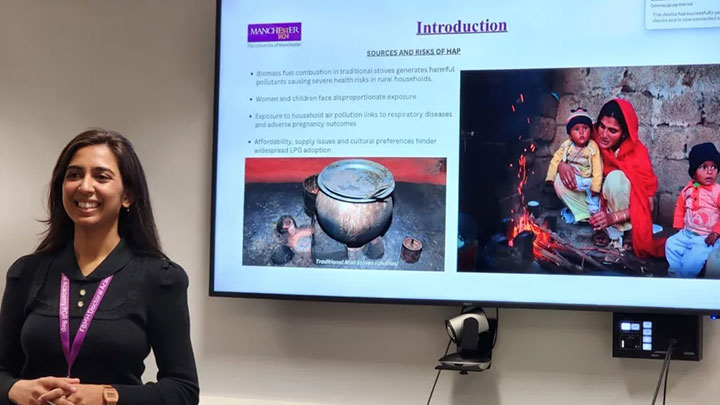
Hear how Anushka, a current postgraduate researcher, developed her research idea, secured support, and navigated the application process step-by-step.
Get practical advice on finding funding, supervisors, and preparing your application.