
Repairing the heart after attack: targeting damage at a molecular level
Heart attacks can trigger changes in a person's heart that may cause long-term damage and lead to heart failure and reduced heart function. Professor Delvac Oceandy talks about his research, supported by the British Heart Foundation, into the molecular mechanisms that drive this damage. He explains how identifying new therapeutic targets could enable the heart to be repaired rather than progressively weakened.

Heart attacks happen when blood flow to part of the heart is blocked, damaging the heart muscle. Heart attacks and related heart diseases caused around 9 million deaths globally in 2021.
Survival without recovery
Heart disease remains one of the leading causes of death worldwide, responsible for an estimated 20 million deaths annually. While survival rates after heart attack have improved significantly, with around 70% of people surviving the initial episode, this progress has revealed a new and pressing challenge.
Often, in survivors, the heart often does not fully recover. Instead, it undergoes structural and functional changes that impair its ability to pump effectively. Over time, this can lead to heart failure, reducing physical capacity and quality of life.
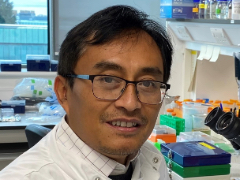
Professor Delvac Oceandy
Delvac is a Professor of Molecular Cardiovascular Sciences in the Division of Cardiovascular Sciences at The University of Manchester.
Despite advances in emergency treatment, there are currently no therapies that directly repair this damage. As a result, many patients experience a gradual decline in heart function, highlighting a critical gap in cardiovascular care.
A different approach: understanding the biology of damage
To address this challenge, Manchester researchers are looking more closely at what happens inside the heart after injury, moving beyond looking at the symptoms to understand the underlying biology of damage.
Working at a molecular level, the research explores the changes that take place within heart cells following a heart attack, including shifts in signalling pathways, cellular stress responses and the way heart tissue remodels over time. Together, these processes can contribute to the gradual decline in heart function seen in many patients.
By building a clearer picture of these mechanisms, it becomes possible to identify specific points where intervention could make a difference, whether by limiting further damage or supporting the heart's ability to repair itself. In doing so, the research aims to move beyond managing decline, opening new possibilities for treating heart failure at its source.
From discovery to potential therapies
From over a decade of research, scientists have now found several promising targets that may help reduce or repair heart damage after a heart attack. By understanding how the heart is injured, this work is leading to possible treatments that act on the repair process itself, rather than just treating symptoms after the damage is done.
The focus is now on turning these discoveries into real treatments. This means testing them in models that are more like the human body to make sure the results apply and are relevant to patients.
“The goal is to move beyond managing decline and find ways to repair the heart itself.”
Professor Delvac Oceandy
Another challenge is delivery: finding ways to send treatments directly to the right part of the heart. This includes safely using biological or genetic methods to help improve the repair process. If successful, this research could change how heart failure is treated, moving beyond treatments that simply manage symptoms towards approaches that help repair the damaged heart.
A global challenge and the road ahead
Despite significant progress, major challenges remain. The biology of heart damage is highly complex, and much of the underlying process is still not fully understood. Even when researchers can map part of the pathway, further mechanisms continue to emerge, highlighting the scale of the challenge.
A key priority is moving beyond early-stage findings to approaches that are relevant to human disease. This requires testing potential therapies in models that more closely reflect real patient conditions. At the same time, developing effective ways to deliver treatments directly to the heart remains a significant hurdle.
There is also a continued need to deepen understanding of the biological processes involved. The heart's response to injury is driven by a network of interacting systems, meaning researchers must build a more complete picture before confidently advancing treatments.
Looking ahead: from molecular insight to patient impact
While this research is based in the UK, it forms part of a wider international research effort to improve understanding and treatment of heart failure. Manchester-led collaborations across the UK and with partners in the United States are helping to accelerate progress, particularly in therapeutic development and targeted delivery. The aim is for future treatments from this work to be useful worldwide and help millions of people no matter where they live.
This research is focused on the future of cardiovascular care. While new treatments are unlikely to reach patients immediately, the long-term goal is clear: to develop therapies that can repair the heart after injury, rather than simply manage its decline.
Over the next decade, success would mean identifying at least one therapeutic target that can move towards clinical application, potentially through collaboration with industry partners who can take discoveries forward into drug development.
If realised, this would represent a major step forward - transforming outcomes for patients and changing how heart failure is treated worldwide.
More information
Related papers
- The serotonin receptor 2b (5-HT2B) modulates heart remodeling following myocardial infarction via regulation of Hippo pathway
- Expression of foetal gene Pontin is essential in protecting heart against pathological remodelling and cardiomyopathy
- Micro RNA-411 expression improves cardiac phenotype following myocardial infarction in mice