Get ready to start your research
You have your offer - now it's time to prepare for your PhD.
Before planning your move to Manchester, this is your opportunity to understand what your postgraduate research journey involves and what to expect when you begin.
This includes how your funding works and exploring your accommodation options in the city, as well as beginning your visa application if you're an international offer holder.
About the Doctoral Academy
Dedicated end-to-end support
Postgraduate researchers in the Faculty of Biology, Medicine and Health become part of our Doctoral Academy (DA).
The DA supports you at every stage of your PhD, overseeing your progress, providing training and development opportunities, and connecting you with the people, communities and guidance that shapes your research experience.
Its ultimate goal is to create a supportive environment that allows you to excel and reach your full potential through:
Development
Build the transferable skills and experience that will support your future career through a wide range of researcher development opportunities.
From conducting and managing research to communication, personal development and career planning, our training programmes help you grow as a researcher and professional throughout your postgraduate research.

Community
Join a community of more than 1,200 postgraduate researchers in our Faculty and connect with fellow researchers across the University.
Through Students Union societies, the Doctoral Academy Society (DAGS) PhD Conference, Faculty PGR Student Reps, sport and networking opportunities, you'll be able to build relationships, share ideas and make the most of your time in Manchester.

Support
Your wellbeing is supported throughout your postgraduate research, with guidance available from dedicated supervisors, advisors and specialist support services across the University.
From academic and pastoral support to counselling and wellbeing resources, you'll have access to help and advice whenever you need it.

Your Doctoral Academy hub
Once you start your postgraduate research, you'll be able to visit the Doctoral Academy on campus in the Simon Building or use our Doctoral Academy website as your main point of reference for further information and guidance.
This is where you'll find all of your key contacts, guidance and processes covering every stage of your programme, including progression, policies and support.

A guide to your PhD journey
What to expect from your PhD
Understanding what lies ahead will help you settle in quickly and make informed decisions from the start.
The University’s interactive resource guides you through the early stages of postgraduate research, including what to expect, working with your supervisor and approaching your research confidently.

Finance and funding
Understanding your funding
Planning your finances early helps you prepare for your PhD and manage the practical costs of study.
If your PhD is funded by a studentship from the University or by UKRI through one of its research councils, you'll need to provide your bank details in advance to ensure payments are made on time and will be asked for this at registration.
You will receive 12 monthly stipend payments on or around the first day of each month by bank transfer (BACS), with the first payment typically being released shortly after your registration is complete.
Before you start your postgraduate research, you'll need to understand how your tuition fees are going to be paid and any steps you need to take:
- Funded via the University or a Research Council: Tuition fees will normally be paid directly to the University on your behalf, so you won't need to take any action.
- Funded by a third-party: You'll need to complete financial registration and submit a sponsor letter to the Student Finance team to confirm how your tuition fees will be paid.
- Self-funded: You'll need to pay for your tuition fees in advance before arriving to avoid an unnecessary delays.
If you are a UK or Irish national and have been successful in applying for a student loan, you'll receive your first payment after your start date, once the Faculty has confirmed your registration.
Your loan will be paid in three instalments of 33%, 33% and 34% each year. After your application has been approved, you'll receive a letter with your payment dates, or you can check them in your online account.
Manchester regularly ranks among the most liveable cities in the country, and is an affordable place to live as a student.
To help you budget for living in Manchester, we've estimated accommodation and living costs for a full-time postgraduate research student over a full academic year (52 weeks).
Visas, ATAS and CAS
Guidance on student visa and immigration
If you're an international offer holder, you'll need to complete several steps before you begin your PhD, including securing your visa and, where required, ATAS clearance.
To apply for a UK student visa, you'll normally need a Confirmation of Acceptance for Studies (CAS) issued by the University. This confirms your place and allows you to begin your visa application.
Some postgraduate research programmes also require Academic Technology Approval Scheme (ATAS) clearance, which must be secured before you can study. The Doctoral Academy admissions team will inform you if you need ATAS clearance.
Our visa and immigration guidance explains:
- How to apply for your student visa
- What documents you need to prepare
- How CAS is issued and what it includes
- Whether ATAS applies to your course and how to apply
- Key timelines to ensure you are ready to start your PhD
You should review this guidance carefully and begin preparations early to avoid delays.
Accommodation
Deciding where to live
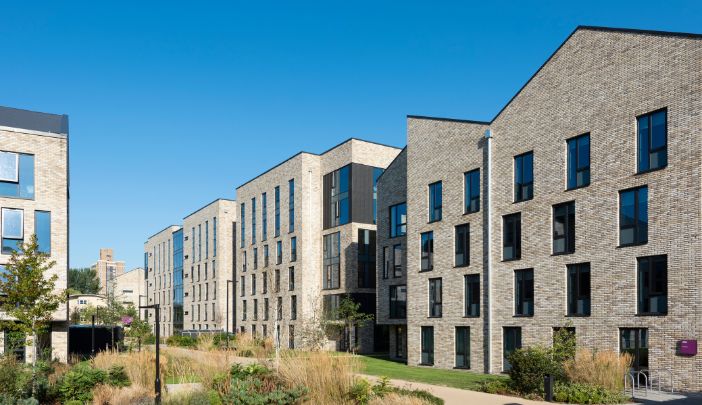
Whether you're looking to secure a room in a residential hall, a private rental, or wanting to continue living at home while you study, find out more about the accommodation options available to you and what you should do next.
Support
Need help or guidance?
There's a lot to take in when you start your PhD, but you’re not alone. The Doctoral Academy and your supervisors are here to support you.
Use this page to plan ahead, know what to expect and prepare for your research journey at Manchester.
If you have any questions, contact the Doctoral Academy admissions team:
Email: fbmh.doctoralacademy.admissions@manchester.ac.uk
In person: 1.93, Simon Building, Oxford Road, Manchester, M13 9PL (Monday to Friday, 9am to 5pm)