
Enabling nursing and medicine students to learn through occupational health placements
Placements are helping students on medicine and nursing courses at Manchester to learn about occupational health and inspire a new generation of practitioners in this field.
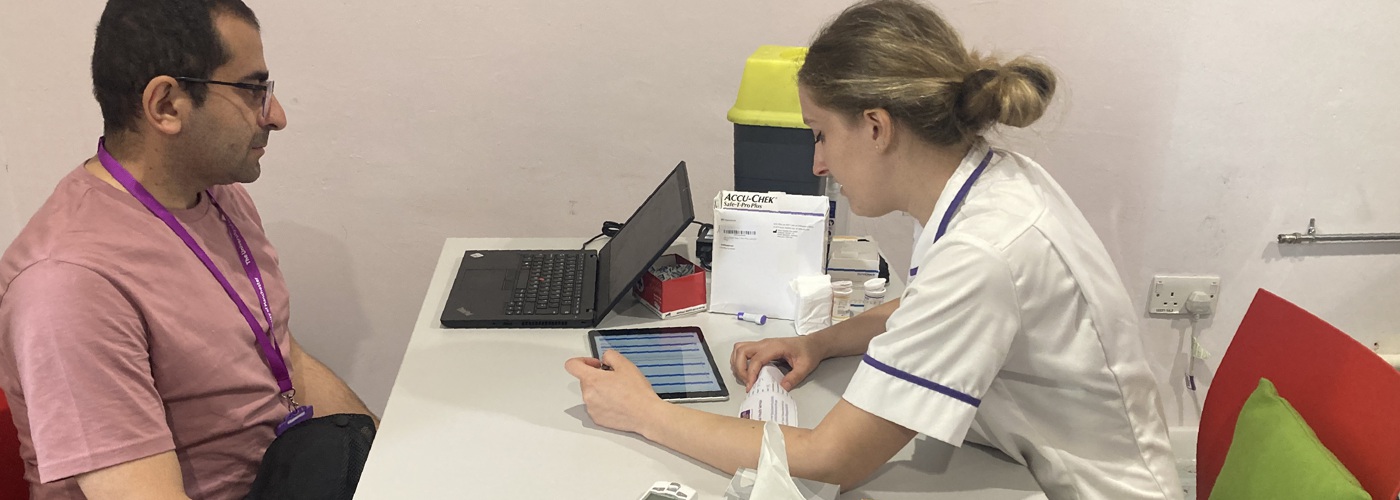
Occupational health lies at the intersection of work, health, and wellbeing. The University's Occupational Health Service plays a central role in safeguarding the health of both students and staff on campus. Its core purpose is to ensure that work does not adversely affect health, whether through exposure to hazards such as noise, chemicals, carcinogens, and respiratory sensitisers, or through the broader impacts of work on physical health and overall wellbeing.
A national challenge
Despite its broad scope and public health importance, the occupational health profession faces workforce challenges, most notably an increasingly aging workforce. The number of registered occupational health professionals in the UK steadily declined from 3,516 in 2016 to 3,220 in 2020. This shows a growing need to attract new entrants into the profession.

Pete Connolly
Pete is Interim Director of Campus Life and a Registered Specialist Community Public Health Nurse. He was previously Head of Occupational Health Services at The University of Manchester.
Introducing students to occupational health during the early years of their career means they will benefit from real-world practical experience. This will also help cultivate the next generation of occupational health practitioners.
This well-established placement model enables students to experience occupational health across a variety of settings, helping them build a realistic and nuanced understanding of the discipline.
Learning in occupational health practice: inside the placement experience
The Campus Life division at the University offers structured placements to nursing students across all years of study, as well as to graduate-entry medical students. Placements typically run for four to eight weeks, where students work alongside experienced occupational health nurses and see the full breadth of practice. This covers areas from health surveillance to immunisation and vaccination programmes.
Crucially, the placements encourage students to think differently about health. They are invited to consider how work, environment and organisational culture shape health outcomes over time.
Broadening perspectives: a community-focused experience
Learning is not defined to a single clinic or service, but extends across the University and wider community.
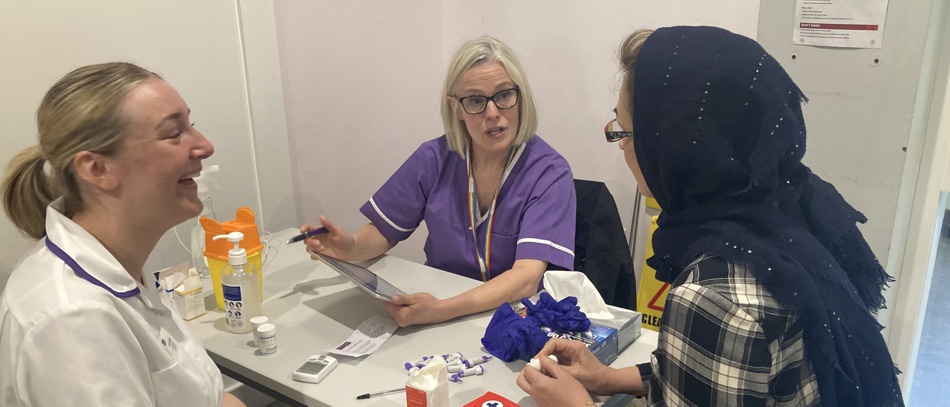
Students can work alongside practice nurses in the University GP Service, providing experience of primary care and sexual health services for both staff and students. They can also engage with social prescribers and third-sector organisations, working beyond traditional clinical placement environments.
For example, Manchester Action on the Street is an outreach service providing health and wellbeing support to sex workers and others working in the nighttime economy. Working with services like these enable students to engage with vulnerable populations and to understand how social, occupational and economic factors intersect to shape health outcomes.
Placing student experience at the heart of programme impact
Feedback from participating students, captured via the Practical Assessment Record and Evaluation (PARE) system, has been consistently positive. Some students have requested additional placements, and others have expressed an interest in pursuing occupational health as a future career path following qualification.
These responses suggest that the initiative has successfully raised awareness of occupational health as a rewarding and impactful career option.
Project lead Pete Connolly, Interim Director of Campus Life at The University of Manchester, describes the project's biggest success as "bringing new people to the discipline", with the placement offering "a completely new lens on what their nursing or medical career has to offer".
The project's most significant challenge was managing practitioner concerns regarding confidentiality, as the service supports both staff and students on campus. To mitigate this, student learners are re-briefed on their previous training about confidentiality and boundary management before each placement. Patient consent is also sought before permitting a student to observe any consultation.
These measures ensure that confidentiality is upheld without compromising the quality of the educational experience. They have proven effective in maintaining trust and professional integrity throughout the process.
Looking ahead
The initiative at Manchester continues to attract growing interest from external organisations, including private employers and other universities. The Faculty of Occupational Medicine has recognised the value of the model and wants to explore how it could be further developed on a national scale.
Looking ahead, the project aims to continue expanding student learning opportunities while developing the Occupational Health Service. Funding from Higher Education England has enabled a pilot Targeted Placement Expansion Programme, through which Registered Mental Health Nurse Ibrar Ahmed has been seconded for six months as a Practice Supervisor for mental health nursing students.
The pilot has been delivered collaboratively by Occupational Health, the Mental Health Support Service, the University GP Service and the Division of Nursing, Midwifery and Social Work. Thanks are extended to Dr Kevin Bayley, Sarah Wells, Ibrar Ahmed and Beth Podesta for their significant contributions.
Overall, the project strongly aligns with the University's 2035 strategic ambitions to embed partner-enabled learning to enhance the student experience. It supports the vision that every student should benefit from meaningful, real-world learning opportunities that prepare them for the complexity and diversity of modern healthcare practice.
Learn more about studying biology, medicine and health at Manchester.