
Investigating obesity and cardiovascular disease
Manchester research is investigating the links between a specific type of fat, called perivascular adipose tissue (PVAT), and cardiovascular disease in obesity.

Cardiovascular disease - a group of conditions affecting the heart and blood vessels - is the leading cause of death worldwide, particularly in low- and middle-income countries. It is most common in people over 60, the fastest-growing age group globally. However, this pattern is shifting as increasing numbers of young and middle-aged adults are put at risk by obesity.
Obese patients are at a high risk of developing multi-morbidities. This means having more than one long-term health condition at the same time, such as high blood pressure, high cholesterol or type-2 diabetes. Together, these conditions can reduce life expectancy.
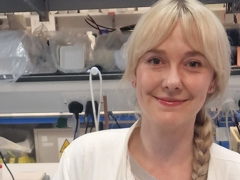
Dr Sophie Saxton
Sophie is a British Heart Foundation Accelerator Research Fellow in the Division of Cardiovascular Sciences at The University of Manchester.
Having multi-morbidities alongside cardiovascular disease makes treatment more complex. Understanding how these conditions progress and interact is essential if new and more effective treatments are to be developed. Many of these conditions are linked by inflammation - the body’s immune response - which can damage the heart and blood vessels over time.
Adipose tissue: friend turned foe
Scientists at The University of Manchester are studying how a special kind of fat called perivascular adipose tissue (PVAT) may be linked to cardiovascular disease in obesity. PVAT is the layer of fat that surrounds blood vessels.
In healthy conditions, PVAT releases factors that play a beneficial role in controlling blood pressure, glucose and insulin, supporting normal blood vessel function.
However, in obesity, the fat cells in PVAT grow too large and do not receive enough oxygen, resulting in chronic inflammation. As a result, PVAT stops releasing beneficial factors and instead releases factors that raise blood pressure and glucose levels. Over time, this can contribute to conditions such as high blood pressure and diabetes.
Management of multi-morbidities
The first line of treatment for obesity-related diseases is diet and exercise. However, this can be difficult for many people. Even when weight loss is achieved, it is common for people to regain the weight, and sometimes more.
"The mechanistic links between obesity and cardiometabolic diseases is poorly understood because the solution is obvious, right? 'Just go on a diet'," says Dr Sophie Saxton, who is carrying out research into PVAT.
"But we all know that weight loss is incredibly difficult, and keeping the weight off is a continuous battle. So, there is a desperate need to fully understand how obesity causes these diseases, so that we can develop better treatments."
Even new weight loss drugs, such as Ozempic, Wegovy and Mounjaro, don't work for everyone, and can cause unpleasant side effects. In many cases, people also regain weight once they stop taking the medication.
By studying how fat, inflammation and the immune system interact, researchers hope to better understand how obesity-related conditions develop and interact at the molecular level. This could lead to new ways of managing and treating people with multiple long-term conditions.
Research into PVAT and its role in high blood pressure and cardiovascular disease has the potential to make a significant global impact. It could help to advance discovery of new therapeutic targets for obesity-related diseases, improve diagnosis, and enable detection or prediction of cardiovascular risk earlier - before symptoms appear.
Related publications
- Interleukin-33 rescues perivascular adipose tissue anticontractile function in obesity (American Journal of Physiology - Heart and Circulatory Physiology)